Embracing Wisdom: A Father's Journey
Updated: Sep 23
The Call Every Parent Fears
The call came at 11:47 on a Thursday night. It was the kind of hour when every ring feels like bad news. Jamal White stood in the kitchen, wearing socks. One hand was inside a box of cereal. He was eating dinner over the sink because the day had gotten away from him. His phone buzzed across the counter.
"Mr. White?" The voice was young and nervous.
"Yeah. Who is this?"
"It is DeAndre. I am with Malik."
Jamal stopped chewing. His son's name changed the air in the room.
"What happened?"
There was noise in the background. A car door slammed. Somebody cursed. Then DeAndre lowered his voice.
"Man, I do not know how to say this. Malik has been hanging with some dudes from over by Carter Street. It is getting serious. He will not listen to me. I think you need to come get him."
For a moment, Jamal was not 35 years old. He was 17 again, standing under streetlights he had no business being under, pretending not to be afraid.
"Where is he?" Jamal asked.
Survival Is Not Wisdom
On the drive across town, Jamal gripped the steering wheel like it might confess something. The radio was off. His mind was loud enough. He had raised Malik the best way he knew how. He kept him fed. He kept him in shoes. He taught him not to let people play him, how to read a room, how to walk away before trouble got too close, and how never to look soft.
But somewhere between one red light and the next, a harder truth rose in him: he had taught Malik survival, but he had not taught him wisdom.
Survival says, "Do not get caught." Wisdom asks, "Where is this road taking you?" Survival says, "Handle it yourself." Wisdom says, "Ask for help before pride costs you everything." Survival says, "Stay ready." Wisdom says, "Stay rooted."
Jamal had learned survival early. His own father had been present in flashes: holidays, apologies, promises, then gone again. His mother worked doubles and prayed over bills like they were sick children.
Nobody had sat Jamal down and said, "Son, this is how you choose friends. This is how you confess fear. This is how you walk with God when life is pressing on your chest." So Jamal became good at getting through. Getting through school. Getting through anger. Getting through fatherhood after becoming a dad at 16. Getting through shame.
Now Malik was 19, grown enough to leave, yet young enough to be led, standing somewhere in the dark with men who knew exactly how to make danger look like belonging.
"I Am Here, Son"
Jamal found Malik outside a closed laundromat. His son wore a hoodie pulled low, jaw tight, and eyes refusing to land anywhere for long. Two young men stood near a parked car. DeAndre hovered near the corner, relieved and scared at the same time.
"Malik," Jamal said. His son looked up, irritated.
"Why are you here?"
"Get in the car."
"I am good."
"No, you are not."
One of the young men laughed under his breath. Malik's face hardened.
"Do not do that," Jamal said softly. "Do not perform for them."
That got him. Malik's eyes snapped up. Jamal saw himself in that look. The pride. The fear. The desperate need to appear untouched. For a second, he wanted to lecture. He wanted to unload every fatherly warning he had been saving. But another voice rose in him, quieter and stronger.
Not here. Not like this. So he said the only thing that felt true.
"I am here, son. Come on."
The Talk Jamal Could Not Fake
Jamal almost snapped back. Instead, he exhaled.
"You are right."
Malik turned his head.
"What?"
"You are right. I do not know everything you are dealing with."
The honesty surprised both of them. Jamal pulled into an empty gas station parking lot and parked beneath a flickering light. He kept both hands on the wheel.
"I taught you a lot of things," he said. "Some of it helped. Some of it probably hurt."
Malik stared out the window.
"I taught you how to survive because that is what I knew," Jamal continued. "But I did not always teach you how to live. I did not teach you how to make wise choices when you are lonely. I did not teach you how to let God into the places you are trying to manage by yourself."
Malik's voice dropped.
"So what now?"
Jamal swallowed.
"I do not know all the answers."
For the first time, Jamal understood why Scripture says that if anyone lacks wisdom, they should ask God, who gives generously without finding fault (James 1:5). He had spent years pretending to know. God was inviting him to begin learning.
"I do not know all the answers," Jamal said again. "But I know we cannot keep doing this alone."
A Church Community He Didn't Know He Needed
That Sunday, Jamal went back to church. Not Easter church. Not "somebody invited me" church. Not the kind where you slip in late and leave before the last song ends. He came early. Malik came with him, arms folded, earbuds in one ear, acting like he had been kidnapped.
After service, Jamal lingered by the side door until Pastor Ellis walked over.
"You got a minute?" Jamal asked.
"For you? Always."
In the pastor's office, Jamal told the truth in pieces. Malik. The phone call. The crowd. His own fear. The years of trying to look stronger than he felt.
"I do not know how to teach him what I never learned," Jamal said.
Pastor Ellis leaned back.
"Then maybe this is where God starts teaching both of you."
The help did not come all at once. It came through Sam, a deacon who ran a small business and invited Malik to ride with him on Saturday mornings. It came through Ms. Jones, who had raised three sons and told Jamal, "Baby, you can be firm without being hard." It came through a men's group where nobody clapped when Jamal spoke. They just listened.
Then one man said, "I have been there."
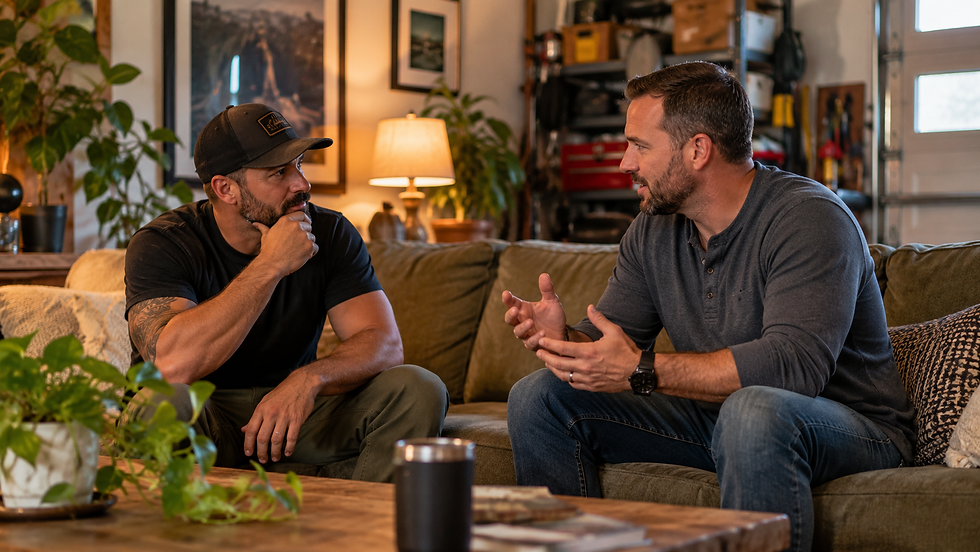
That sentence became oxygen. A healthy church community does not replace a parent. It surrounds one. It gives fathers and mothers language when fear steals their words. It gives young adults other trustworthy voices. It reminds families that spiritual growth is not a solo climb.
One evening, Malik came home late and found Jamal sitting at the kitchen table with two plates of reheated spaghetti.
"You waited up?" Malik asked.
"Yeah."
"You mad?"
"I am concerned."
"That is the same thing."
"No," Jamal said. "Mad is easier."
For a while, they ate without talking. Then Jamal asked, "What do you like about being around those guys?"
Malik shrugged.
"They do not act like I am a kid."
Jamal nodded.
"They make you feel respected."
A Different Kind of Inheritance
Jamal began reading Proverbs in the morning, not like a scholar, but like a man looking for street signs. He wrote short notes on index cards and left them where Malik could find them.
"Wisdom protects what impulse spends."
"Real friends do not need you reckless."
"God is not embarrassed by honest prayers."
Malik rolled his eyes at first. Then one card disappeared. Then another. One Saturday, Marcus invited Malik to help repair drywall at an elderly widow's house. Malik complained all the way there.
But when he came home, there was dust on his jeans and a strange softness in his face.
"She made us lemonade," he said.
Jamal smiled.
"That will happen."
"She asked if I was in school."
"What did you say?"
"I told her not right now."
"And?"
"She said, 'Not right now is not the same as never.'"
Jamal felt something loosen in his chest. This was how wisdom often arrived: not as thunder, but as a sentence from someone who had lived long enough to know.
Months later, Jamal stood in the church parking lot after a Wednesday night gathering. Malik was laughing with two young men from the youth leadership team. Not perfect friends. Not polished. But pointed in a better direction.
Pastor Ellis walked up beside Jamal.
"How you holding up?"
"I used to think I failed because I did not know enough," Jamal said. "Now I think maybe the failure would have been pretending I did."
The pastor nodded.
"That is wisdom talking."
Practical Ways to Teach Wisdom at Home
Have one honest conversation with someone you trust this week. Do not wait until you can explain everything perfectly. Start with the truth you can name.
Ask God daily for wisdom before asking Him for solutions. Quick fixes may quiet fear, but biblical wisdom shapes the heart that makes the next decision.
Teach your children what you are learning, not just what you already know. Let them see repentance, prayer, counsel, and growth in real time.
Reflection Questions
What beliefs did you inherit that need to be replaced with God's wisdom?
What are your children learning from your actions, not just your words?
Where are you pretending to have answers when you actually need help?
Who is helping you grow spiritually today?
The strongest parents are not the ones who never fall. They are the ones their children watch get back up with God.
MMZinit believes growth begins with one honest conversation... and sometimes that conversation starts with yourself.
One conversation at a time.


Comments