The Boys and Men We Leave Behind When There Is No Father and No Older Brother
Updated: Jul 30
Mental Health, Mentorship, Fatherhood, Community: A Call to Action
Dedicated to Chino. Thank you for the inspiration.

The Conversations We Avoid
In our communities, we often engage in important conversations. Yet, there are still topics we shy away from. We discuss the impact of growing up without a father. We share statistics and challenges. We explore the long-term effects. But there’s a crucial part of the story that often gets overlooked:
What happens when a young Black, Latino, or White boy grows up without a father? What if he lacks an older brother, mentor, coach, uncle, or any positive male role model?
As these boys grow into men, they carry unanswered questions. Who teaches them what healthy manhood looks like? Who helps them navigate heartbreak, failure, rejection, and responsibility? Who shows them that strength is more than anger and that vulnerability is not weakness?
For many, the painful answer is: no one does it consistently. This absence does not dictate a boy's future, but it can leave a lasting mark.
Learning Life Without a Guide
Most of us learn through observation long before we learn through instruction. We watch how people handle stress, treat others, solve problems, manage conflict, and respond to disappointment. Young boys are no different. When a father or trusted male role model is present, he can provide an example of what adulthood can look like. Not perfection, but a steady sense of direction.
When those relationships are missing, many young men are left to figure things out alone. Some learn through painful mistakes. Others turn to social media, television, friends, or the streets for answers. Unfortunately, not every lesson learned in those places leads to healthy outcomes. Many young men begin building their understanding of manhood from whatever examples are available, whether those examples are healthy or not.
A boy should not have to build his entire understanding of manhood from absence.
The Quiet Mental Health Impact
The absence of male guidance does not automatically determine a person's future. However, it can influence how a young man sees himself, handles emotions, and understands his place in the world. Many Black, Latino, and White men who grew up without positive male role models describe feelings of disconnection, lack of support, and uncertainty about where they belong. Some struggle with trust, while others carry feelings of abandonment or inadequacy. Many bear emotional wounds they have never spoken about.
This is not just a childhood issue. Grown men carry this too. A boy can become a young man, a father, a husband, a worker, a leader, or a friend and still wrestle with the absence he learned to survive. An older man can carry the same wound for decades, still wondering who was supposed to teach, guide, correct, protect, or simply say, "I am proud of you."
What makes this especially difficult is that boys are often taught to hide their pain. Instead of expressing sadness, they learn to suppress it. Instead of asking for help, they endure it. Instead of discussing their struggles, they convince themselves they must handle everything alone. Over time, this emotional isolation can lead to anxiety, depression, anger, substance misuse, and unhealthy relationships. The struggle is often invisible because many men become experts at appearing okay while carrying burdens no one else can see.


The Search for Brotherhood
Every boy, young man, grown man, and older man wants to feel connected. He wants to know he matters, belongs, and that someone sees his potential, even when he cannot see it himself. When healthy connections are missing, the search for belonging does not disappear. It simply moves elsewhere.
Sometimes young men find positive mentors, coaches, pastors, teachers, or community leaders who help guide them forward. Other times, they find acceptance in places that demand very little from them while asking them to become someone they were never meant to be.
This is why mentorship matters. This is why brotherhood matters. This is why one positive relationship can change the course of a life. Many of us can point to one person who believed in us when we struggled, challenged us when we needed correction, or encouraged us when we were ready to quit. That kind of influence is powerful.
Becoming What We Did Not Have
One of the most inspiring things you will find in communities across the country is men who chose not to let their story end with what they lacked. Many men who grew up without fathers became devoted fathers. Many men who never had mentors became mentors. Many men who felt unseen now spend their lives helping others feel valued. They did not erase the pain of their past, but they refused to pass it on. Instead, they became what they once needed.
That does not require perfection. It requires presence. Sometimes being present means checking on a young man who has become unusually quiet. Sometimes it means coaching a youth team, volunteering in the community, or simply listening without judgment.
Sometimes it means sharing your story so someone else knows they are not alone. The truth is that many young men are not looking for someone to fix their lives. They are looking for someone who cares enough to walk beside them while they figure it out.

A Responsibility We All Share
Fatherhood matters. Brotherhood matters. Mentorship matters. While not everyone can be a father, each of us has the ability to encourage, support, and invest in someone else's life. There are boys growing up today who need guidance. There are young Black, Latino, and White men carrying questions they do not know how to ask. There are older men still trying to heal from wounds that began decades ago.
The solution will not come from one program, one speech, or one social media post. It will come through relationships. It will come through presence. It will come through people choosing to show up for one another.

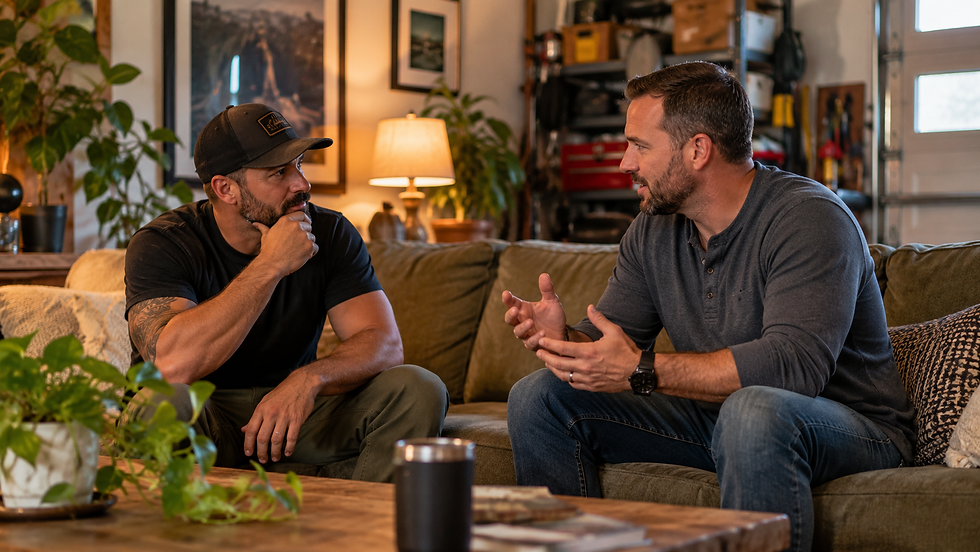
At MMZinit, we believe healing often begins with something simple but powerful: a conversation. Because sometimes the difference between a young man feeling lost and finding his way is knowing that someone cares enough to listen. And that change happens one conversation at a time.
Reflection Question
Who is one young man you can check on, encourage, mentor, or simply listen to this week?


Comments