When Men Suffer in Silence, Our Boys Are Watching
Updated: Aug 19
By Mindful Momentz Initiative (MMZinit) Real Growth. Real Conversations. Real Healing. One Conversation at a Time.

Content note: This blog is for education, encouragement, and awareness. MMZinit is not a clinical mental health provider and does not diagnose or treat mental health conditions. If you or someone you know is in crisis in the United States, call or text 988 right away.
Why This Conversation Matters
There is a conversation we do not have often enough: when men suffer in silence, boys are watching and learning. A boy may not have the words to say, "Dad seems depressed," "My uncle is carrying trauma," or "The men around me do not feel safe enough to talk." But he can feel the atmosphere. He can sense distance, anger, tension, numbness, and silence.
That matters because boys do not only learn from lectures. They learn from patterns. They learn from how men respond to stress, apologize after conflict, handle disappointment, ask for help, talk about fear, and show love. When the men around them carry pain alone, boys can begin to believe that manhood means doing the same.
This conversation is not about blaming men. Many men are carrying burdens they were never taught to name. This is about interrupting a cycle. If we want emotionally healthy young men, we must care about the mental health of the fathers, stepfathers, grandfathers, uncles, pastors, coaches, mentors, teachers, and older brothers shaping them.
The Numbers Remind Us This Is Serious
The public health data is sobering. The CDC reports that more than 49,000 people died by suicide in the United States in 2023. Males made up nearly 80% of suicide deaths, and the suicide rate among males was much higher than among females. Depression is also common. The National Institute of Mental Health reported that an estimated 21 million U.S. adults had at least one major depressive episode in 2021, including 6.2% of adult males.
Globally, the World Health Organization reports that nearly 1 in 7 people worldwide were living with a mental disorder in 2021. But behind every number is a person. A father. A son. A brother. A husband. A pastor. A veteran. A worker. A coach. A friend. Many men look strong on the outside while quietly fighting battles on the inside. Families often feel the weight of those battles before a man ever names them as depression, anxiety, trauma, grief, or burnout.
Boys Are Learning What Manhood Looks Like
A boy's first picture of manhood often comes from the men closest to him. If he sees men communicate, listen, apologize, pray, seek help, and stay emotionally present, he learns that strength can include honesty. If he sees men shut down, explode, avoid, disappear emotionally, or pretend everything is fine, he may carry those same patterns into adolescence and adulthood.
Every boy is quietly asking questions through what he observes:
Is it safe to talk?
Are emotions allowed?
Do men get support?
Does pain make me weak?
Can faith and help-seeking go together?
When boys do not see healthy emotional expression, they may confuse silence with strength and anger with authority. They may learn to hide sadness, avoid vulnerability, or believe that asking for help is failure. Those lessons do not stay in childhood. They can affect friendships, marriages, parenting, leadership, and faith life later on.
What Boys May Show When Men Are Struggling
Children do not always say, "I am anxious," "I feel unsafe," or "I do not know how to process what is happening at home." Emotional strain often shows up through behavior. A boy may become more aggressive, defiant, withdrawn, restless, distracted, or emotionally shut down. Adults may call it attitude, laziness, disrespect, or lack of discipline. Sometimes correction is needed. But we also need to ask deeper questions.
What is this child carrying? What is he seeing? What emotional climate is shaping him? What has he learned about expressing fear, sadness, grief, or confusion? This does not mean every behavior issue is caused by a man's mental health. It means the emotional health of the adults in a boy's life matters. Home, church, school, coaching spaces, and community environments all help shape what a boy believes about safety, love, correction, and support.
Fatherhood Is More Than Provision
Fatherhood is not only provision. It is presence. It is patience. It is repair. It is emotional availability. A father does not have to be perfect, but his presence matters deeply. When a man is overwhelmed, depressed, traumatized, or isolated, it can become harder to stay emotionally available. He may still love his children, but stress can reduce his patience, warmth, consistency, and ability to connect.
Boys often interpret distance personally. A father may be fighting silent battles, while a child is wondering, "Did I do something wrong?" or "Why does he not want to spend time with me?" That is why men need support before they reach a breaking point. Supporting fathers is one way to support sons. The point is not to shame fathers. It is to remind them that healing is leadership. Getting help, having honest conversations, and learning healthier emotional habits can become one of the greatest examples a man gives his children.
Why Men Often Wait Too Long
Many men were raised with a narrow definition of strength. Provide. Protect. Keep going. Keep quiet. For some men, mental health language was never part of childhood. In some families and communities, therapy was viewed with suspicion, faith was used to avoid emotional honesty, or survival took priority over reflection.
In underserved communities, barriers may be even heavier: cost, lack of insurance, limited culturally responsive providers, distrust of systems, stigma, work schedules, transportation, and past negative experiences. For Black and Latino men, veterans, fathers, and working-class men, conversations about mental health can also carry cultural pressure: do not bring shame to the family, do not look weak, do not tell strangers your business, do not admit you are hurting. But silence has a cost. The next generation pays attention to what we normalize.
Faith and Mental Health Can Work Together
At MMZinit, faith is part of who we are. We believe prayer matters. We believe God heals, restores, comforts, and strengthens. We also believe that asking for support is not a lack of faith. Prayer and professional help do not have to compete. Sometimes God works through a counselor. Sometimes He works through a support group. Sometimes He works through a mentor, pastor, coach, therapist, doctor, or trusted brother willing to listen without judgment.
Faith communities can become powerful bridges to hope, but they must be careful not to overpromise. Churches, ministries, and faith-based organizations can encourage prayer, community, and wise support while also referring people to licensed professionals when needed. This is especially important when someone is experiencing suicidal thoughts, severe depression, trauma symptoms, substance misuse, domestic conflict, or danger to self or others.
How Fathers Can Model Healthier Strength
Boys do not need perfect fathers. They need present, honest, growing fathers. Start small. A father or father figure can model healthier strength by saying:
"I have been stressed lately, and I am working on it."
"I should not have yelled. I am sorry."
"I need a few minutes to calm down, then we can talk."
"I am going to talk to someone because I do not want to keep carrying this alone."
"You are allowed to have feelings, and I want to hear what is going on."
These moments do not make a man weak. They make him trustworthy. They teach boys that emotions are not enemies, repair is possible, and help-seeking is wisdom. Practical steps for fathers and father figures:
Name your feelings honestly without placing adult burdens on the child.
Apologize after conflict and show what repair looks like.
Create consistent one-on-one time without phones or distractions.
Let affection, encouragement, and warmth be visible.
Seek help early when stress, anger, sadness, or isolation becomes too much.
How Mentors and Coaches Can Help
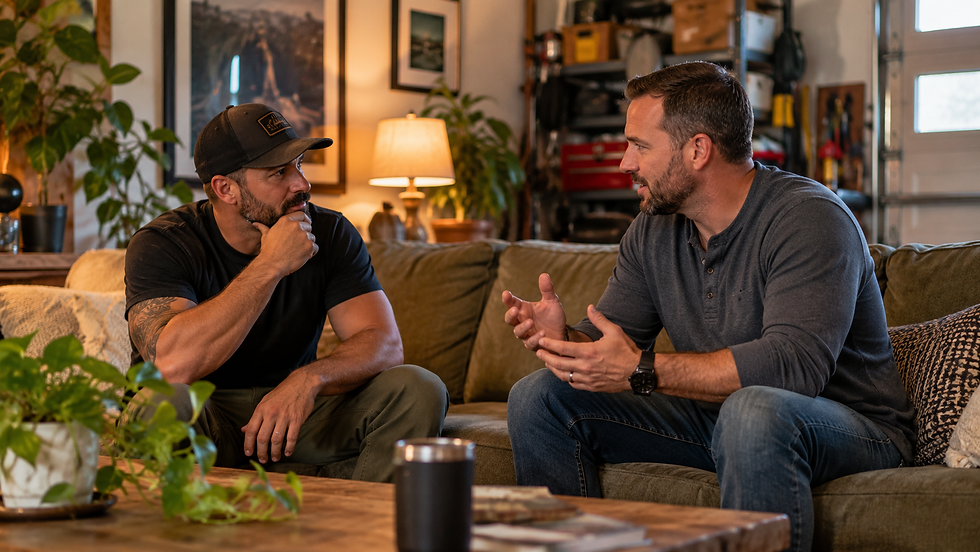
Mentors and coaches often see what boys hide from everyone else. They may notice the boy who is always angry, always joking, always quiet, or always performing. Sometimes the loudest child and the quietest child are both asking to be seen. A consistent, caring adult can become a lifeline. You do not have to be a therapist to be present. You can listen. You can ask better questions. You can model respect. You can connect a young person to family support, school support, church support, or professional help when needed.
Practical steps for mentors and coaches:
Look beyond behavior and ask what may be underneath it.
Use questions like, "What has been heavy lately?" or "Who do you talk to when things get hard?"
Model calm correction instead of humiliation.
Be consistent. Boys trust what they can count on.
Know your limits and involve caregivers or professionals when a child may be unsafe.
How Faith Leaders Can Build Safe Spaces
Pastors and faith leaders have a unique opportunity. Many men who may never walk into a therapist's office will still walk into a church, prayer gathering, Bible study, men's group, or community event. That makes the faith community a bridge. But a bridge must lead somewhere safe. Faith leaders can help reduce shame by speaking honestly about mental health. They can remind men that prayer matters and support matters. They can create spaces where men do not have to pretend. They can also build referral lists for licensed counselors, crisis lines, support groups, and local resources.
Practical steps for pastors and faith leaders:
Preach and teach in ways that do not shame emotional struggle.
Normalize counseling, mentoring, and support groups as part of wise care.
Create men's spaces where honesty, accountability, and prayer can happen together.
Train leaders to recognize warning signs and respond with care.
Keep a referral list for licensed professionals, crisis resources, and community services.
When to Seek Immediate Help
If someone is talking about wanting to die, feeling like a burden, having no reason to live, feeling trapped, or planning to harm themselves, take it seriously. Do not leave the person alone. In the United States, call or text 988 or use chat through the 988 Suicide & Crisis Lifeline. Support is available 24/7. Seek immediate professional or emergency help if there is danger to self or others, active suicidal thoughts, severe substance use, violence in the home, psychosis, extreme withdrawal, or a child is unsafe. There is no shame in crisis support. Sometimes the strongest step is getting help quickly.
Final Word: One Conversation at a Time
Our boys are watching. They are watching how we handle stress, how we respond to pain, how we talk about faith, how we treat their mothers, how we repair conflict, how we ask for help, and how we show up when life gets heavy. The goal is not perfection. The goal is growth. A man who is willing to heal can change the atmosphere of a home. A father who is willing to talk can give his son language. A mentor who is willing to listen can interrupt a harmful pattern. A church that is willing to be honest can become a bridge to hope.
At Mindful Momentz Initiative, we believe healing happens through faith, support, accountability, community, and real conversations. We are not here to replace therapy or professional care. We are here to help start conversations that can lead people toward the support they need. Real growth begins one conversation at a time.
MMZinit Reflection
A boy does not need to see a perfect man. He needs to see a man who can be honest, accountable, present, prayerful, and willing to grow.
Resources
The information in this blog was informed by public health data, crisis resources, mental health education sources, and faith-community support organizations.


Comments