When the Mission Ends Brotherhood Still Matters
Updated: 1 day ago
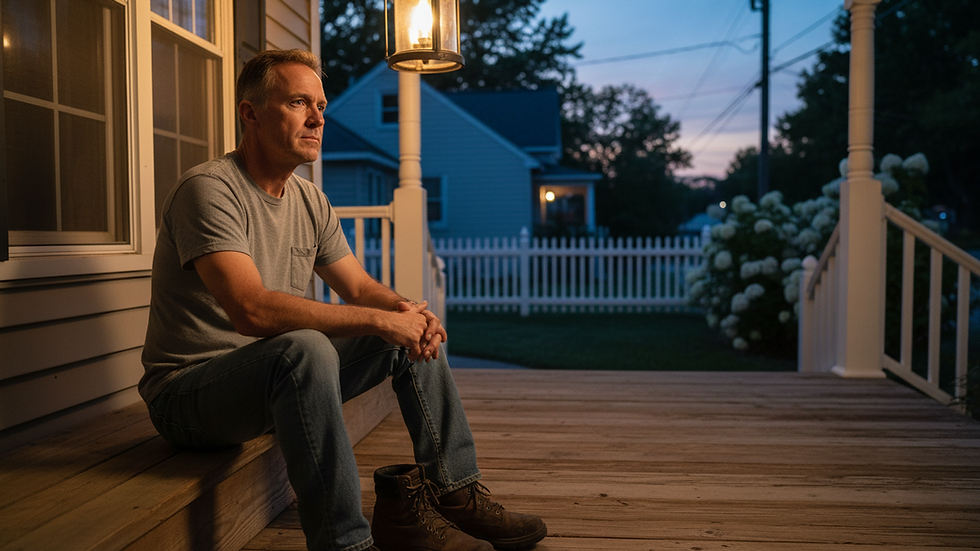
He has a good life now.
He gets up early, goes to work, pays the bills, helps with the kids, fixes what breaks, answers the group text, cuts the grass, and shows up when people need him. Maybe he has a wife who loves him. Maybe he has friends from church, the gym, the neighborhood, or work. Perhaps his coworkers respect him. From the outside, nothing looks wrong.
And still, every now and then, something feels different.
It might hit him in a quiet moment, driving home after a long day. It might show up when he hears a phrase only his old unit would have used. It might happen when he opens a dusty footlocker and sees a patch, a photo, a coin, or a pair of boots. He does not necessarily want to go back. He may not miss the hurry-up-and-wait, the bad coffee, the long stretches away from home, the uncomfortable gear, or being told where to be and when.
What he misses is harder to explain.
He misses walking into a room and being known without giving a speech. He misses the kind of trust built through shared pressure. He misses the jokes that made no sense to anyone else. He misses the feeling that, no matter how tired or irritated everyone got, somebody had his back.
Then one day the uniform comes off.
The mission changes. The people scatter. Civilian life moves forward.
And the question becomes simple, but not easy: When the mission ends, where does the brotherhood go?
The Uniform Comes Off Before the Bond Fades
Military service has a way of compressing time.
A man can serve beside someone for a short stretch and feel like he has known him for years. That bond does not always come from talking about feelings or sharing life stories. Sometimes it comes from showing up on time, doing the job, carrying weight, staying awake when everyone is tired, and proving over and over that he can be counted on.
Trust becomes less about what someone says and more about what he does.
In that world, connection often grows through ordinary, unglamorous things:
Long days that blur together
Shared discomfort
Inside jokes born out of boredom
Clear roles and expectations
Responsibility that cannot be ignored
The knowledge that others are depending on you
Those things build a kind of shorthand. A look can say enough. Silence does not feel awkward. A joke can carry more meaning than a long conversation. Frustration, fatigue, pride, and purpose all live in the same space.
That does not mean every military friendship is perfect. Units have conflict. Personalities clash. Some people serve and never feel especially close to those around them. Veterans are not a single type of person, and service does not create the same memories for everyone.
Still, for many men, military life offers something rare: a place where purpose and belonging are tied together every day.
When that ends, the bond does not disappear. It often remains strong. But it may become harder to reach.
The guys are in different states. Some are still serving. Some are raising families. Some answer every message. Some go quiet for long stretches, then pick up like no time has passed. There may be reunions, texts, calls, memes, shared photos, and late-night check-ins.
Yet the daily closeness changes. Nobody is sleeping in the next rack. Nobody is beside him in the motor pool, on post, in the field, on the flight line, on the ship, or in the smoke pit. The rhythm that held everyone together is gone.
That loss can be subtle. It can sit under the surface of an otherwise full life.
Civilian Life Can Be Good and Still Feel Different
Many veterans build stable, meaningful lives after service. They become good husbands, fathers, neighbors, employees, business owners, coaches, volunteers, and community leaders. They use the discipline, patience, humor, and grit they developed in uniform. They figure things out.
But a successful transition does not mean nothing is missed.
Civilian life often works by looser rules. People come and go. Coworkers may be friendly, but they may not feel like teammates in the same way. Neighbors wave, but their lives may not overlap much. Friends may care deeply, yet not understand why certain stories matter or why some habits remain.
A man may find himself surrounded by people and still miss being part of a tight crew.
That can be confusing. If life is good, why does something feel absent? If people love him, why does he still miss the old bond? If he has responsibilities and purpose, why does he sometimes feel like the mission became less clear?
The answer is not that civilian love is lesser. It is different.
Family offers intimacy, commitment, and home. Civilian friendships can be real and lasting. Work can give pride and direction. Faith communities, sports teams, volunteer groups, and neighborhoods can all provide real connection.
But military brotherhood is often forged under conditions most people will never share. It is built around duty, risk, discomfort, repetition, humor, and trust. That kind of connection is hard to recreate by accident.
It usually will not appear through casual small talk in a driveway or a few friendly conversations at work. It has to be built with time, honesty, and shared effort.

Men Are Often Taught to Keep Moving
This is not only a veteran story. It is also part of a broader male experience.
Many men learn early to handle things themselves. Provide. Protect. Solve the problem. Stay useful. Stay calm. Do not make things harder for anyone else. Keep moving.
For veterans, that pattern can run even deeper. Military training reinforces adaptation. Assess the situation. Complete the task. Take care of the team. Do what needs to be done. If it is hard, do it anyway.
Those habits can serve a man well. They help him show up for his family, keep promises, manage stress, and stay steady when others depend on him.
They can also make it harder to admit, even quietly, “I miss my people.”
Not because he is weak. Not because he cannot handle civilian life. Not because something is wrong with him.
Because connection matters.
A man can be strong and still need other men he trusts. He can love his family and still need friends who understand a certain part of him. He can be grateful for his present life and still miss a past brotherhood that shaped him.
This is where many men get stuck. They tell themselves they should be fine because nothing dramatic is happening. They compare their lives to others and decide they have no right to feel anything missing. They bury the thought under work, errands, parenting, exercise, projects, and the next responsibility.
But the need for brotherhood does not vanish because a man has a mortgage, a job, or people depending on him.
It may just become easier to ignore.
Brotherhood Is Built Through Shared Weight
The reason military bonds feel different is not only nostalgia. It is structure.
In service, men often share a clear mission. They know who is responsible for what. They train together. They face consequences together. They see each other tired, frustrated, bored, proud, and under pressure. They learn each other’s strengths and flaws.
Civilian life does not always provide that kind of repeated, meaningful contact.
Many adult friendships are built around convenience. A quick drink. A kids’ game. A cookout. A few texts. Those things can be good, but they may not create depth unless someone takes the risk to make them more honest.
Brotherhood usually grows when men do something side by side.
That could mean:
Training for a race
Coaching kids together
Joining a volunteer crew
Hunting, fishing, hiking, or camping
Working on a house or vehicle
Serving in a veterans group
Meeting regularly with a few trusted men
Taking on a hard project that requires teamwork
The activity matters less than the pattern. Men often connect when there is a shared task, a clear reason to show up, and enough time for trust to form.
Not every conversation has to be serious. In fact, most will not be. The jokes, stories, teasing, and ordinary talk are often what make heavier honesty possible later. The point is not to force every friendship into a deep emotional exchange. The point is to build spaces where men can be known over time.
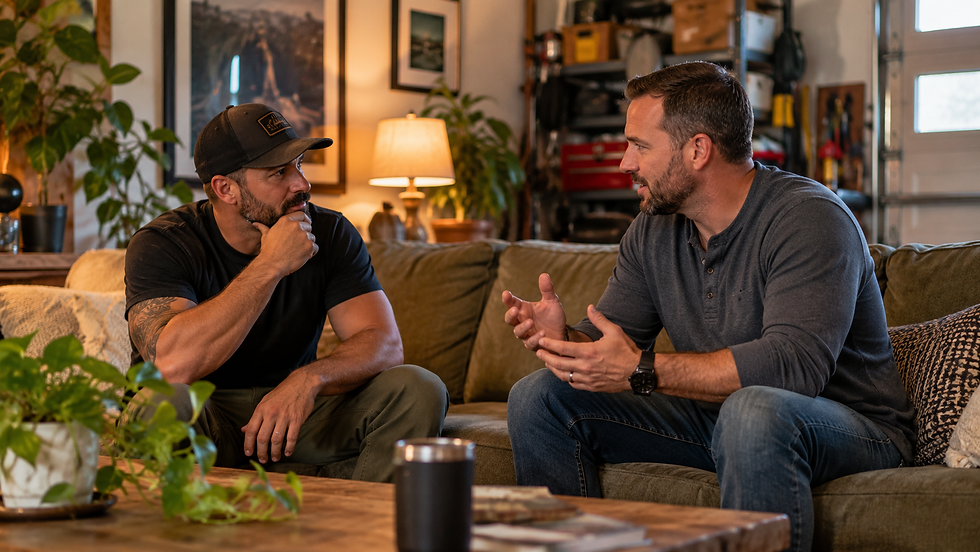
A strong bond can start with something as simple as, “Want to grab coffee Saturday?” or “I’m working on the deck this weekend. Come by if you want.”
Small invitations matter.
So does consistency. One call can help. A monthly breakfast can become a lifeline. A yearly trip can keep old friendships alive. A group chat can carry humor and memory across distance. Brotherhood does not need to look like it did in uniform to still be real.

Missing the Brotherhood Is Not Living in the Past
Some men worry that missing their old crew means they are stuck. They may avoid talking about service because they do not want to sound like they are trying to relive it. They may think their families are tired of hearing the stories. They may worry civilians will not understand.
But remembering brotherhood is not the same as refusing to move forward.
A man can honor what he had and still build what comes next. He can keep old ties and form new ones. He can carry the best parts of military life into civilian life: loyalty, humor, courage, accountability, service, and the willingness to show up.
The challenge is that civilian brotherhood often requires more intention.
In uniform, connection is built into the structure. People live, train, work, travel, wait, and struggle together. Outside of service, a man may have to create the conditions for connection.
That might mean being the one who reaches out first.
It might mean refusing to let pride turn into isolation.
It might mean telling an old friend, “I was thinking about you today,” without making it weird.
It might mean admitting to a wife or trusted friend, “I miss the guys. I miss that part of my life.”
It might mean joining something before he feels fully ready.
These are not dramatic acts. They are human ones.
They are also acts of leadership.
Because when one man reaches out, he often gives another man permission to do the same. The call that feels awkward at first may be exactly what someone else needed. The invitation to meet up may restart a friendship that looked quiet but was not dead. The decision to build a group, plan a trip, or check in regularly may become a new form of service.
The Mission Changes, But Purpose Can Remain
Part of what men often miss after service is not only the people. It is the sense that their effort clearly mattered.
Military missions can be frustrating, exhausting, and complicated, but they often come with a direct sense of duty. There is a job. There is a team. There is a standard. There are people counting on each other.
Civilian purpose can feel more scattered. Work matters, but not every job feels like a calling. Family matters deeply, but family life can be full of quiet duties that rarely get recognized. Community matters, but it may take effort to find a place to serve.
The old mission ends. That does not mean a man is finished having purpose.
Purpose may now look like raising children with patience. It may look like mentoring younger men. It may look like helping another veteran navigate civilian life. It may look like serving at a food pantry, coaching a team, joining a search and rescue group, supporting a local veterans organization, or simply being the dependable man people can call at 10 p.m.
The mission may become less official, but no less meaningful.
The brotherhood may change too. It may include old military friends, new civilian friends, neighbors, brothers-in-law, men from church, other dads, guys from the gym, or people met through service. It may be smaller. It may be quieter. It may take longer to trust.
But it can still be real.

Brotherhood Still Has to Be Chosen
The end of military service can bring relief, pride, grief, freedom, uncertainty, excitement, and ordinary daily life all at once. There is no single veteran experience. Some men transition with ease. Some struggle. Many do both at different times.
What deserves more attention is the quiet middle ground: the man who is doing well, loving his family, working hard, and still missing the men who once stood beside him.
That missing does not make him ungrateful. It does not make him broken. It means something mattered.
Brotherhood mattered.
Shared purpose mattered.
Being understood without explaining everything mattered.
Knowing someone had his back mattered.
When the mission ends, brotherhood does not have to end with it. It may need new habits, new places, and new invitations. It may need a phone call, a road trip, a Saturday morning project, a veterans group, a standing breakfast, or the courage to say, “I miss you guys.”
The uniform comes off. The people scatter. Civilian life moves forward.
But brotherhood can still be carried, rebuilt, and passed on.
Sometimes the next mission is simply this: do not let the good men disappear from your life.


Comments